From Excel chaos to a scalable back office
How SR Zeitarbeit rebuilt its entire operating system — from scattered Excel sheets to an integrated back office that grows with the company instead of slowing it down.

Growth that outpaced the systems
Growth in the staffing industry is a double-edged sword. Revenue and assignment volumes go up, while behind the scenes complexity grows even faster. That is exactly where SR Zeitarbeit stood: a data-intensive business model in events, hospitality and project-based assignments — combined with a system landscape that simply was not built for that pace.
Excel sheets, point solutions and hidden risks
Over the years a familiar pattern had emerged: Excel sheets, point solutions and local databases. Each worked on its own, but together they produced more and more friction. Data was maintained multiple times, information was transferred manually, processes ran in parallel or twice. What looked pragmatic at first became a real risk at scale: billing errors, missing transparency, rising manual effort. Even external audits kept uncovering inconsistencies traced back to this fragmented landscape.
Don't optimise — rethink
It became clear that single fixes would no longer cut it. The entire back office had to be re-thought. Instead of scattered data: a single, consistent data foundation. Instead of manual work: automated workflows. Instead of reactive corrections: system logic that catches errors up front.
Requirements no off-the-shelf product could meet
All relevant processes — from employee management through customer and order management to billing — had to come together in one system. Software needed to be intuitive enough to work without heavy training. Interfaces to payroll and invoicing were mandatory, as was automated yet flexible document generation. And it had to evolve continuously without breaking the foundation. Standard products did not fit: too complex, too expensive, or too sluggish to deliver in the daily reality of a fast-growing staffing provider. The decision was to build a custom solution instead of bending the business to existing software.
Built while running the business
The new back office was built directly in live operation. The conceptual foundation was set in one week, the technical build took around three. After hardening came a pilot phase with old and new systems running in parallel — minimising risk and validating the system under real conditions. The full switch happened in a single day.
Employee management on a consistent data base
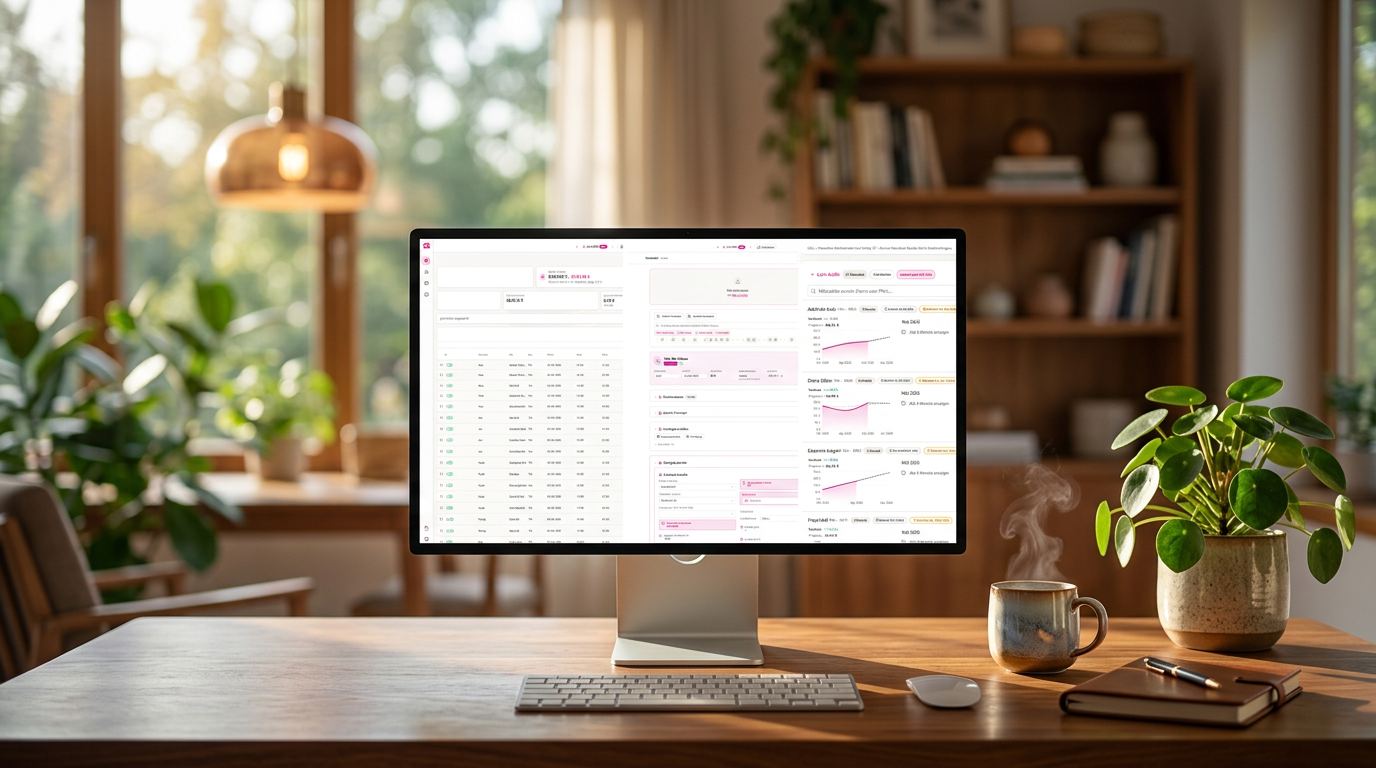
The result is a fully integrated back office that unifies all core processes on one platform. Employee management covers all HR-related workflows — including contract management, short-term employment checks, DRV verification, social insurance optimisation and automated document creation. Master data, assignment data, planned changes and the employer area all live in one structured place. What used to be fragmented across Excel files is now one consistent employee record.
Invoicing, payroll and real-time KPIs
A dashboard delivers real-time KPIs on revenue, hours, premiums, vacation and sick load, and contribution margin per order. Invoicing is wired directly to scheduling — every hour worked lands automatically in the right order, with the correct wage type, premium and amount. That is transparency the old setup simply could not deliver.
Tight integration with SMARTCHILLI — no media breaks
Scheduling runs in SMARTCHILLI, while the back office delivers structured data and integrates existing Excel-based processes through import functions. On that base, digital assignment lists are generated, which feed time tracking and billing. The system is rounded out by interfaces to payroll — in particular ADDISON — and to invoicing via Lexware. The result is an end-to-end data chain without media breaks.
Errors are prevented, not corrected
The real game-changer is not feature count but system logic. Instead of checking data only at the end of a process, the system intervenes at input. Automated validations, structured checks and AI-assisted analyses catch inconsistencies early. For a large share of employees — up to 90 % — potential errors are eliminated before they happen.
What changes day-to-day — and in the cost base
The change is tangible: manual effort drops sharply, processes run faster, and quality goes up at the same time. Decisions are made on consistent data while rework and corrections shrink. Replacing existing systems — ERP, CRM, payroll prep — also cut recurring costs by around €1,500 per month.
A clean cut beats incremental optimisation
What makes this project special is less the technology than the discipline of thinking. Instead of optimising the existing setup step by step, a clean cut was made and the back office rebuilt as the central control layer. The result is not yet another tool but resilient infrastructure that grows with the company — treating new requirements as extensions, not problems. The pattern travels: in complex, data-driven business models, fragmented systems eventually hit a wall. The lever is not more software, but moving the underlying processes into a clear, integrated structure. That is what happened here. And that is why this system works.
Ready to drop the gut feeling?
Try SMARTCHILLI free for one month and experience scheduling without guesswork.
Book a live demo