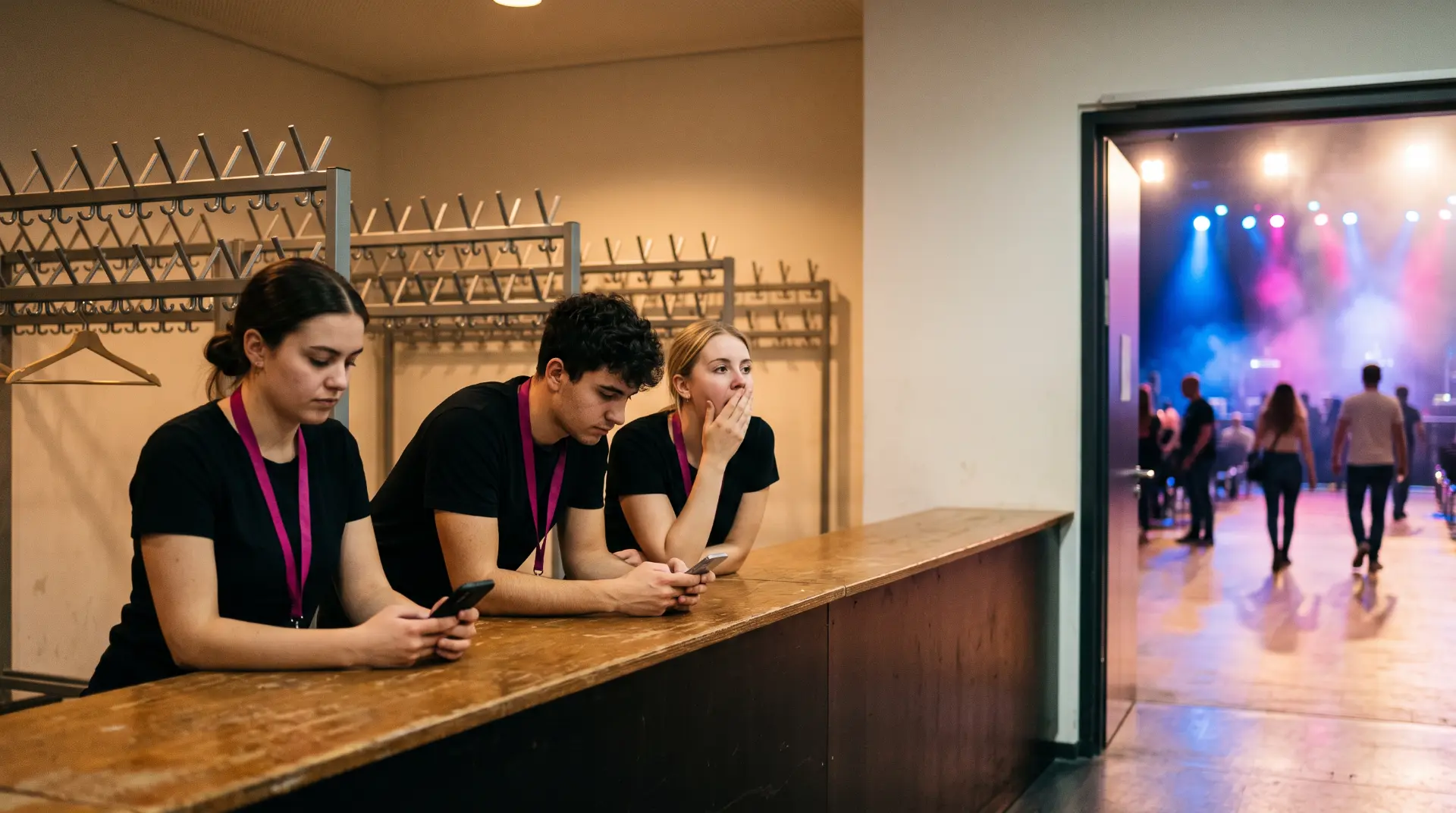
Aktivrente: a second pool of casual staff alongside students?


The trade fair runs from Tuesday to Friday, during the day. That very week, the students are sitting exams. Many event and catering businesses know this gap. Since January 2026 there has been an instrument that hardly anyone in the events industry has on their radar yet: the Aktivrente (Germany's tax-free earnings allowance for employees past the statutory retirement age). It makes it much more attractive for people of retirement age to work regularly. For businesses, this can create a second, reliable pool alongside the students.
In short
- Anyone who has reached the statutory retirement age and is in employment subject to social security contributions can earn up to €2,000 a month tax-free.
- This does not apply to mini-jobs or to early retirees.
- For the business, a part-time job with Aktivrente is even cheaper per euro of wages than a mini-job. The employees themselves only pay health and long-term care insurance.
- It is particularly interesting for weekday assignments: trade fairs, conferences, business catering, boxes and cloakrooms.
What the Aktivrente is – and what it isn't
The name is misleading: the Aktivrente is not an additional pension but a tax allowance under § 3 Nr. 21 EStG (German Income Tax Act). Since 1 January 2026, income from employment of up to €2,000 per month has been tax-free, i.e. up to €24,000 a year.
Three details matter for planning:
- It is an allowance, not a cut-off threshold. Anyone earning €2,300 only pays tax on the €300 above it. The salary as a whole does not become taxable.
- The allowance applies per month. What remains unused in a quiet month cannot be carried over to the trade fair month.
- There is no progression proviso. The tax-free wages therefore do not raise the tax rate on the pension.
Who benefits – and who doesn't
Eligible are employees who have reached the statutory retirement age. When that is depends on the year of birth: anyone born in 1960 reaches it in 2026 at 66 years and 4 months. From those born in 1964 onwards it is 67.
Not eligible are:
- Mini-jobs. They remain a world of their own with their own earnings limit. From 2027 this is €633 per month (more in the post Planning mini-jobbers in 2027).
- Early retirees below the statutory retirement age.
- Self-employed people as well as civil servants with their salaries.
The allowance also only applies if the employer pays statutory pension insurance contributions on the wages. That is the case for normal employment subject to social security contributions. The Aktivrente is therefore an argument for proper part-time contracts and not for the next €633 worker.
Why this is interesting for events, trade fairs and stadiums
The potential is large. According to the German statutory pension insurance (Deutsche Rentenversicherung), around 1.05 million old-age pensioners were in employment subject to social security contributions at the end of 2024, about 7 % of them. Thanks to the Aktivrente, working in retirement now pays off noticeably more in net terms.
This group suits event, trade fair and stadium businesses for several reasons:
- Available on weekdays and during the day. Exactly when students are in lectures or exams.
- Independent of the semester. Exam periods and semester breaks change nothing for retirees.
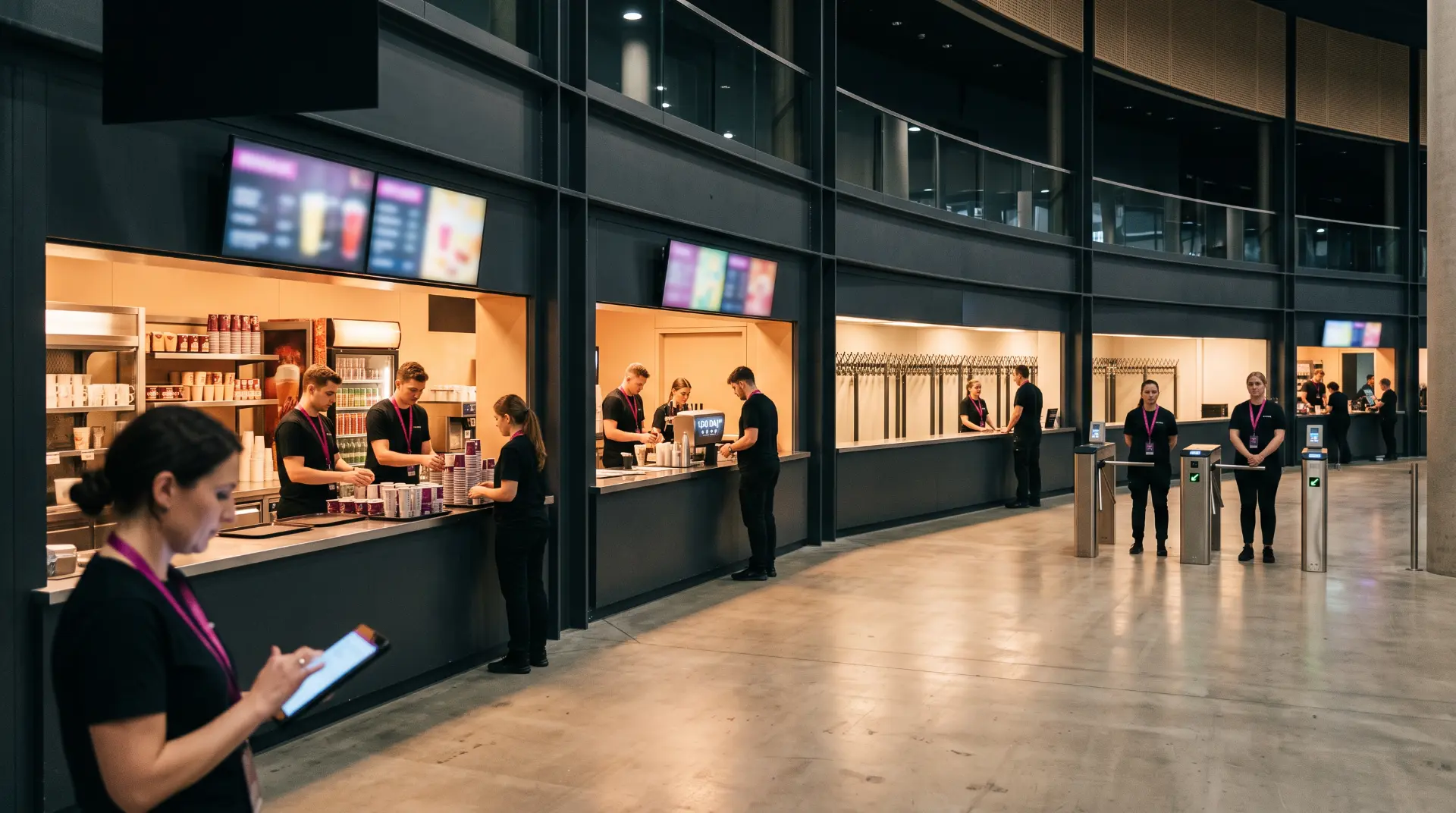
- Life experience with guests. That pays off at the entrance, cloakroom, info counter, accreditation or in box service.
- Plannable commitment. Someone who deliberately wants to work two days a week is more likely to confirm regularly than someone torn between the lecture hall and a flat party.
This is not about replacing students. They remain indispensable for evening and weekend peaks, for concerts and match days. But a second pool closes the gaps the first one reliably has.
What it costs: the mini-job is not the cheap option
For casual staff, many businesses almost automatically choose a mini-job because it seems “cheap”. For the employees that is true, because for them gross equals net. For the business it isn't.
For a commercial mini-job, the employer pays a flat 13 % health insurance, 15 % pension insurance and 2 % flat-rate tax. That is 30 % on every euro of wages, up to 31.17 % with levies.
For a part-time job for retirees, the employer pays its share of health and long-term care insurance as well as the employer's share of pension and unemployment insurance. Depending on the wage level, that is around 21 to 24 %.
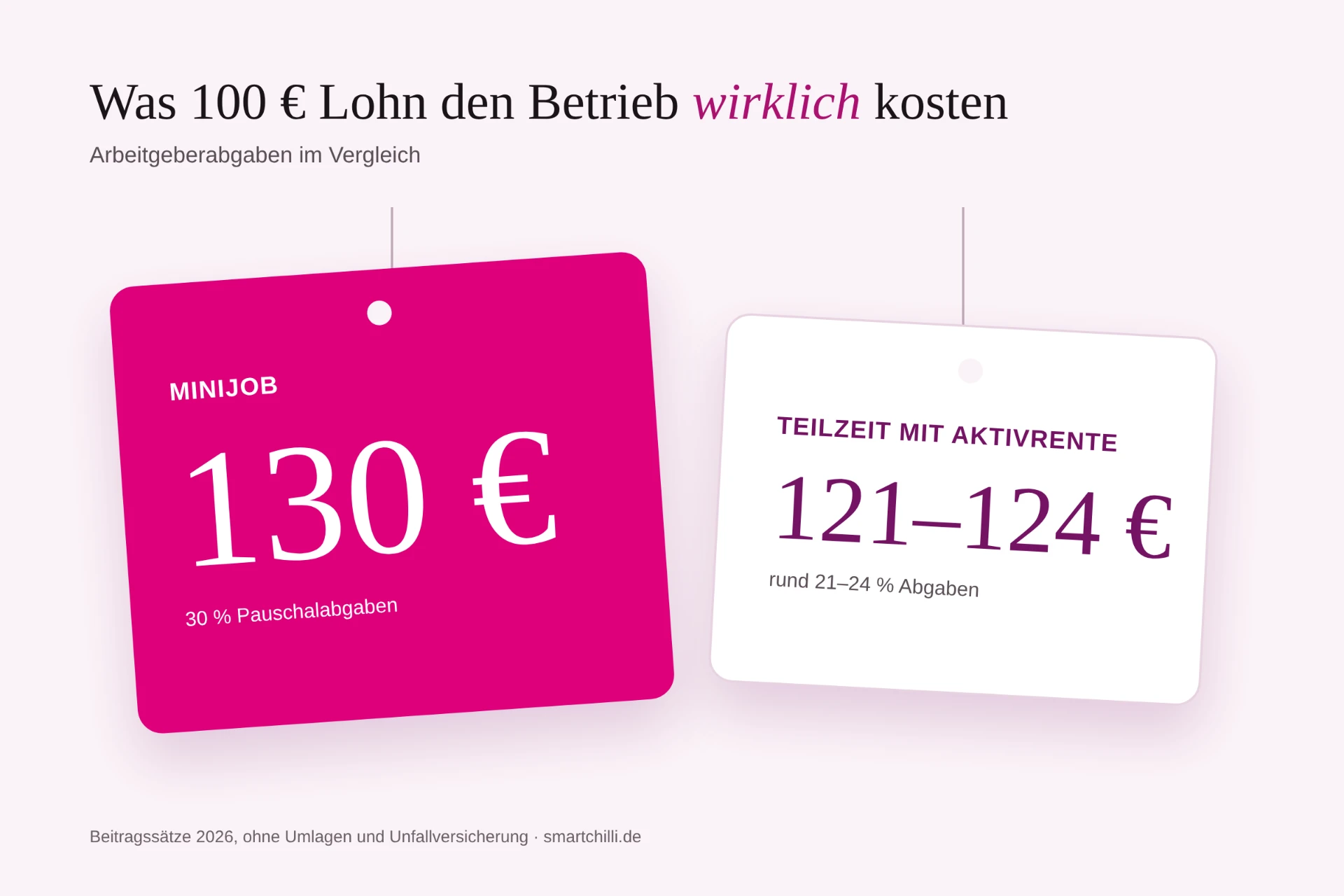
| Mini-job | Part-time with Aktivrente | |
|---|---|---|
| Wages | €100 | €100 |
| Employer contributions | €30 | approx. €21–24 |
| Total cost | €130 | approx. €121–124 |
Levies and accident insurance are added in both cases.
An example: Ms K. is 67 years old and works two trade fair days a week for €1,200 gross per month.
- For the business: employer contributions amount to around €260, so total costs are around €1,460.
- For Ms K.: there is no wage tax, and no pension or unemployment insurance either. Around €90 goes on health and long-term care insurance. Net pay is around €1,110.
As a mini-jobber, Ms K. would be allowed to earn at most €633 from 2027, and the business would still add a good 31 % on top.
The result: per euro of wages, the part-time worker with Aktivrente is cheaper than a mini-job and can take on almost twice as many hours. For anyone who wants to work more than ten hours a week, that is a strong argument in the conversation.
Calculated with the 2026 contribution rates: reduced health insurance rate of 14 % plus the average additional contribution of 2.9 %, long-term care insurance with children. The midi-job (transition zone) up to €2,000 is taken into account. Your payroll department will calculate the individual case precisely.
What the HR office needs to consider
The effort is limited. But a few points belong in your processes:
- No application needed. The allowance is applied directly in payroll.
- Document the statutory retirement age. Record from which month the requirements are met.
- Tax class VI: If someone already has another job, the allowance is only applied here if the person confirms in writing that it is not already being used elsewhere. This confirmation goes into the payroll account.
- Payroll account and certificate: Tax-free amounts are recorded in the payroll account and shown on the wage tax certificate. An annual wage tax adjustment by the employer is excluded in these cases.
- Fixed-term contracts: Since 2026, a fixed-term contract without objective grounds is possible even if the person has worked for you before, provided they have reached the statutory retirement age. That is practical for seasonal contracts, for example from the trade fair season to the Christmas market.
- Time tracking: The obligation to record all working time applies here too. Our practical guide to time tracking summarises the current state.
How to build a second pool
1. Reach out in a targeted way. Former employees, senior citizens' networks, local district newspapers, volunteer exchanges or notices in sports clubs are good places. In the job ad, concrete figures attract attention: “2 days a week, up to €2,000 a month tax-free”.
2. Tailor roles accordingly. Not every shift suits everyone. Entrance, cloakroom, info counter, food counter and box service work well. Long night shifts with heavy set-up and dismantling work less well. Ask about preferred days and physical capacity in the first interview.
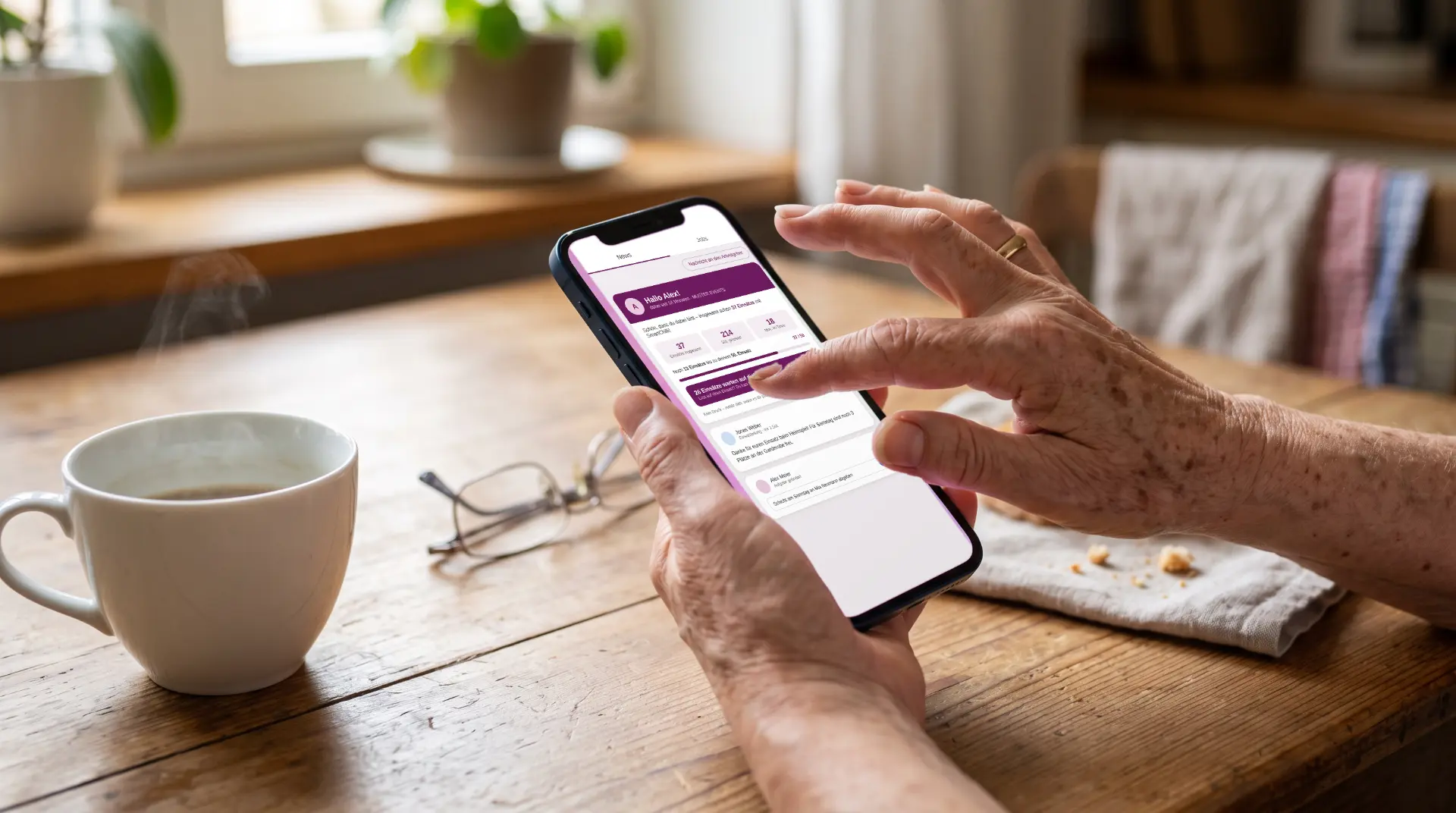
3. Make it visible separately, plan together. So that the second pool doesn't get lost in day-to-day work, create a separate group in SMARTCHILLI, for example “Available on weekdays”. Post open shifts via event dating. Whoever fits confirms with a swipe, and phone chains disappear. Students and retirees appear in the same plan, but you can see at a glance who is filling which gap.
4. Keep an eye on hours. Anyone earning more than the allowance covers pays tax on the rest as normal. That isn't a problem, but it shouldn't come as a surprise to anyone. The hours alert shows when someone reaches their planned limit.
Conclusion
The Aktivrente is not a cure-all for staff shortages. But it addresses exactly the weak spot of many event businesses: weekday assignments at times when students can't work. Building a second pool now gives you a head start in the next trade fair season.
Want to see how several pools come together in one plan? Discover the SMARTCHILLI shift planning app.
FAQ
As of: November 2026. This post is for general information only and does not replace tax or legal advice in individual cases.
Ready to drop the gut feeling?
Try SMARTCHILLI free for one month and experience scheduling without guesswork.
Book a live demo