Mandatory time tracking in Germany 2026 – the practical guide
Since the German Federal Labor Court's decision of 13 September 2022 and the planned reform of the Working Hours Act, employers in Germany must systematically record their staff's entire working time. What that means in practice, which deadlines and formats apply — and what digital systems really need to deliver so time tracking is not just legally compliant but genuinely workable.


Why is this now mandatory? The BAG ruling in short
On 13 September 2022 (case 1 ABR 22/21), Germany's Federal Labor Court made it clear: employers are already required today — under section 3 (2) no. 1 of the Occupational Safety and Health Act — to introduce and use a system for recording working time. The obligation follows from occupational safety, not from the Working Hours Act. It therefore applies regardless of whether and when the legislator sharpens the Working Hours Act. For employers, waiting is not an option.
What exactly has to be recorded?
Start, end and duration of the daily working time must be recorded — not just overtime, not just deviations from a target. Trust-based working time without any recording, open Excel sheets with no audit trail, or purely manual paper logs no longer meet the bar. Recording must be objective, reliable and accessible — also for staff themselves.
Who is affected?
The obligation applies to all employers regardless of sector and size. Small businesses, staffing providers, hospitality, retail, event and exhibition build, trade and temporary work are all covered. The exception for executive staff (§ 18 Working Hours Act) covers a very narrow group — managers in the everyday sense usually do not fall under it.
Delegation, paper, app — what is allowed?
The Federal Labor Court expressly states: recording may be delegated to staff or third parties. Responsibility for a working system stays with the employer. Electronic systems are not mandatory, but in practice the only realistic answer — especially with shift, on-call or on-demand work. Pure paper records are hard to keep audit-proof, and Excel sheets without change history are exposed.
What a digital time-tracking system has to deliver
A workable digital process covers five requirements. First, capturing start, end and duration of working time as well as breaks — not just hours worked. Second, objective capture, e.g. via a smartphone check-in on site, not retroactive self-reporting. Third, traceability: every change is logged (who changed what and when). Fourth, staff access to their own times. Fifth, GDPR-compliant storage with a clear purpose and defined deletion periods.
Deadlines: when do I have to act?
The obligation already applies today. The draft reform of the Working Hours Act sees staggered transition periods for smaller companies but does not remove the core obligation. Practical recommendation: don't wait for the final wording. Anyone still operating without a system today already carries the risk of fines, back-payments during audits, and labour-law disputes — for example over contested overtime.
What about trust-based working time?
Trust-based working time remains possible — but only with recording. Staff can still flexibly determine the position of their working hours, but it must still be captured and documented. "No system, no records" is no longer a viable option.
Sanctions: what happens if I don't comply?
Breaches of occupational safety duties can be fined by the authorities. The practical risk is often bigger: in labour-law disputes over overtime, the burden of proof shifts toward staff when there is no reliable system. Company and pension audits also increasingly demand clean time records.
How SMARTCHILLI solves time tracking
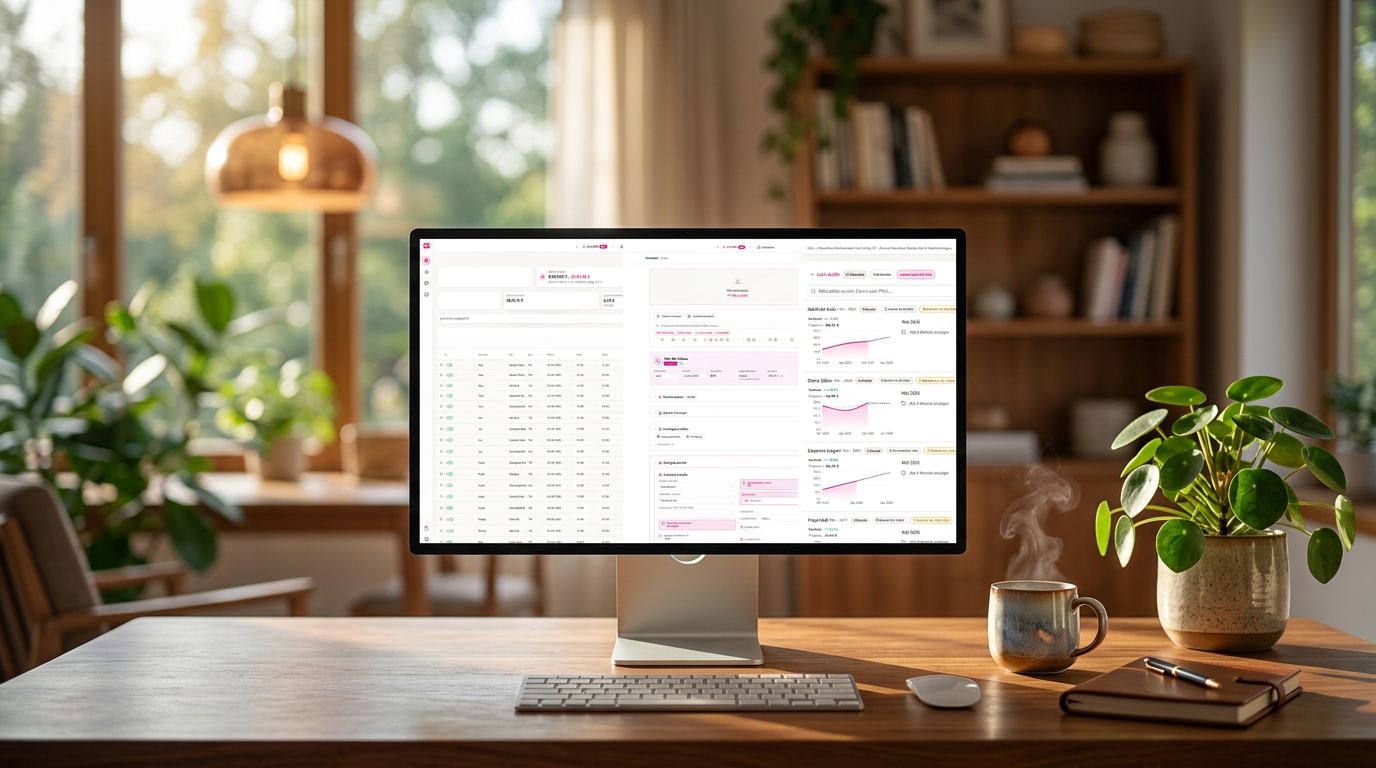
SMARTCHILLI ties scheduling directly to time tracking: staff check in and out via smartphone on site, dispatchers see real-time hours, every correction is logged with timestamp and user. Reports for payroll and invoicing are generated automatically — without doubt, without double entry, without Excel transfers. Anyone still collecting hours instead of capturing them is losing margin and time exactly where digital processes have long been standard.
FAQ
Do I have to record electronically? Not strictly, but practically there is no real alternative — paper is hard to keep audit-proof for shift or field work. Does the obligation apply to mini-jobbers and temporary staff too? Yes. For marginally employed staff, the recording obligation already applied under the Minimum Wage Act. Do I have to record breaks? The start, end and duration of working time must be recorded; the position of breaks follows from § 4 Working Hours Act. Can I delegate recording to staff? Yes. The employer stays responsible for a working system. Does trust-based working time still work? Yes, but only with recording. The position of working time remains flexible; documentation is not optional.
Ready to drop the gut feeling?
Try SMARTCHILLI free for one month and experience scheduling without guesswork.
Book a live demoKommentare
- Noch keine Kommentare – sei die*der Erste!