Shift swaps on WhatsApp: why swapping belongs in workforce planning
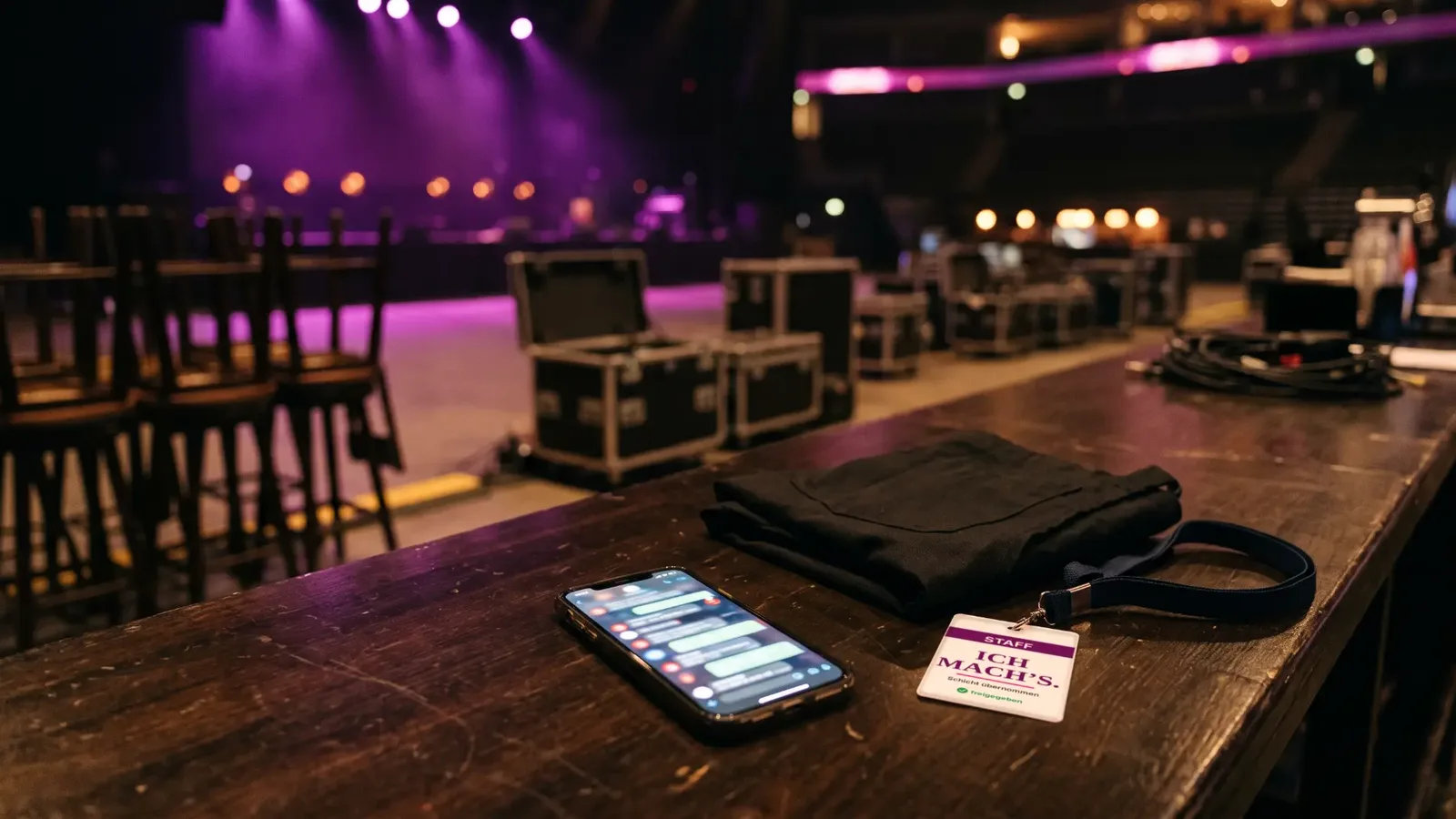

Friday, 11:14 pm, in the casual staff group chat: „Can anyone cover Saturday for me? I suddenly have an exam.“ Two thumbs up, one reply: „I’ll do it.“ For everyone involved, that settles it. For everyone except dispatch. They find out on Monday at the earliest. Or on Saturday itself, when someone is standing at the entrance who isn’t supposed to be there according to the plan.
Shift swaps are everyday life in events and hospitality. The problem isn’t the swap itself, but where it happens.
In brief
- People who want to swap will do it – in a private group chat behind the planners’ backs if need be.
- That costs dispatch time, overview and, in the worst case, a wrongly staffed shift.
- With the December update, staff offer a confirmed shift directly in SMARTCHILLI. The system checks who is allowed to take over, and dispatch approves with one click.
- Until approval, nothing changes: whoever is scheduled shows up.
Why staff swap shifts in the first place
A confirmed shift is binding – and rightly so. But anyone who schedules students, employees in mini-jobs (Minijobs, marginal employment under German law) and part-timers also knows: weeks often pass between commitment and shift. An exam gets moved, a child falls ill, an obligation comes up.
The good news: many staff want to solve the problem themselves instead of simply cancelling. They look for a replacement. That initiative is valuable. It just needs a place where planning can see what is happening.
The idea for this feature actually came from our own staffing team. At some point the casual staff there set up their own swap group. The swap requests then came back to the office as one-off cases – for follow-up questions, re-planning and corrections.
What swapping in the chat really costs
A single swap in the chat seems harmless. Added up, four problems arise:
- Dispatch finds out too late. The plan shows the wrong person. Follow-ups, reminders and briefings go nowhere.
- Nobody checks whether the replacement fits. Has the person had the required briefing? Does the shift fit their agreed working hours? Nobody asks in the chat.
- Rework in time tracking and payroll. Someone other than planned clocked in. By the time hours are approved at the latest, someone has to sort it out.
- Data protection. Work arrangements in private messenger groups, with everyone’s private phone numbers, are tricky for employers – and hard to control.
A deliberately cautious example shows how much time the rework alone takes:
| Assumption | Value |
|---|---|
| Swap requests per month (bypassing planning) | 15 |
| Rework per swap (follow-up, re-planning, correcting hours) | 10 minutes |
| Rework per month | 150 minutes |
| Rework per year | 30 hours |
30 hours a year – almost four full working days in dispatch, just for cleaning up. Not included are the cases where it gets really expensive: a shift nobody turns up to because each thought the other was coming.
How shift swapping works in SMARTCHILLI
The December update introduces the „Offer shifts to colleagues (Schichten an Kollegen anbieten)“ feature. The process has four steps:
- Offer the shift. Anyone who can’t work a confirmed shift offers it in the app. There is no extra button and no new menu. The feature sits where the shift is shown anyway. The shift gets the status „Offered“.
- SMARTCHILLI checks who may take over. The offer doesn’t go to everyone, only to colleagues who are eligible for the shift. They see it in their personal news feed.
- Someone takes over. A suitable colleague responds to the offer.
- Dispatch approves. Dispatch confirms the swap with one click. Only now is the shift swapped – plan, time tracking and payroll match automatically.

Important: „Offered“ doesn’t mean „cancelled“
Offering a shift starts a process; it doesn’t tick anything off. Until dispatch has approved, the originally scheduled person stays scheduled – and comes to work. If nobody takes over, SMARTCHILLI reminds them by push notification that they are expected. No phone call, no extra task for dispatch, but everything documented.
That is a deliberate decision. Shift swapping is meant to be an orderly way out for genuine emergencies, not a convenient back door. A confirmed shift must not become a bargaining chip. Reliable planning needs reliable commitments – and a proper reserve instead of blanket overstaffing. We worked out why that saves real money in our article on the cost of overstaffed shifts.
What dispatch gets out of it
- Overview instead of surprises. Every swap request is visible in the system before it takes effect.
- Control without extra work. SMARTCHILLI does the pre-check; approval is one click.
- Clean data. Whoever works is in the plan. Hours don’t have to be rewritten afterwards.
- Spot patterns. A dashboard report shows, for any period you choose, how often shifts were offered and taken over. That makes it obvious when certain shifts or times are swapped regularly.
- Communication stays in the system. No sprawl in private group chats, no private phone numbers in circulation.
Conclusion
Staff who look for their own replacement are a stroke of luck. You just have to give them the right place to do it. When swaps happen where planning happens, everyone wins: staff solve their problem quickly, colleagues get extra shifts, and dispatch keeps the overview.
How many swap requests still end up in the chat in your business today?
FAQ
Note on the example: the figures are illustrative assumptions and do not replace an analysis of your business. This article does not constitute legal advice, in particular on data protection matters.
Try SMARTCHILLI for free
Shift swaps, job dating and time tracking in one plan. Try SMARTCHILLI for free or let us show you everything in a live demo.